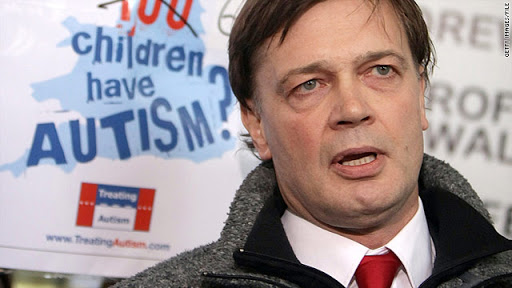
The Andrew Wakefield case presents a publication to the Lancet that was fueled by unethical/biased behavior with an undermining incentive among the perpetrators. The 1998 publication proposed that MMR vaccines was linked to autism. The underlying factors were not disclosed on how Wakefield came to that conclusion, and the mindset behind the study.
2 years before the the study was published, a group of lawyers that was plotting a case against the MMR manufacturers paid Wakefield a lump sum that would support their case by advocating him to carry out the 1998 research. They even presented Wakefield with subjects that would support their case which Wakefield non-hesitantly did. The subjects in testing later on were biased and not random. Not only that, in 1997, Wakefield filed a patent on a vaccine that would have competed against the MMR vaccine. Yet another major conflict of interest. Fueled by greed and financial interest/gain, I can see why Wakefield would make a study that favored those interests. This would in turn compensate him from the lawyers, and his patent that he would market as an alternative to MMR vaccines would be very much appealing.
Was his behavior unethical and unjust? I believe so. These major conflicts of interest was never disclosed to the public upon publishing the 1998 study which led to a detrimental decline to vaccinations, taking advantage of parents of autistic children/newborns that were trying to find a cure for autism, and increasing the diseases that the vaccinations were designed to prevent. The damage was already done. Even after his 1998 study was retracted in 2010, the austism myth is still somewhat believed by some parents even when there is proof of the unethical behavior behind the study that constitutes it null and void.
Sources:
- Dominus, S. (2011, April 21). The Crash and Burn of an Autism Guru. Retrieved January 24, 2020, from https://www.nytimes.com/2011/04/24/magazine/mag-24Autism-t.html
- Open, D. J., Diekema, D. S., & Marcuse, E. K. (2011, January 18). Assuring research integrity in the wake of Wakefield. Retrieved January 24, 2020, from https://www-bmj-com.ezproxy.lib.utexas.edu/content/342/bmj.d2
- Rao, T. S. S., & Andrade, C. (2011, April). The MMR vaccine and autism: Sensation, refutation, retraction, and fraud. Retrieved January 24, 2020, from https://www.ncbi.nlm.nih.gov/pmc/articles/PMC3136032/
- (n.d.). Retrieved January 24, oracknows on January 1, 2007. (n.d.). oracknows. Retrieved January 24, 2020, from https://scienceblogs.com/insolence/2007/01/01/surprise-surprise-andrew-wakefield-was-p 2020, from https://www.youtube.com/watch?v=HGb9m1dbNdM
 Ethics in Computer Science